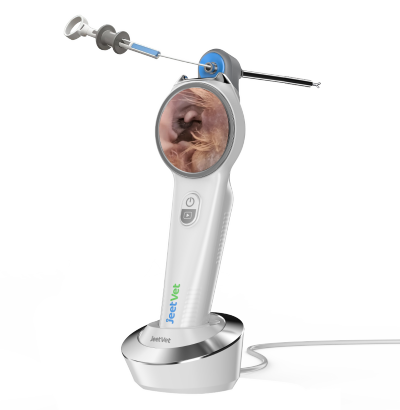
Cat Swallowed a Sewing Needle — Minimally Invasive Esophageal Foreign Body Removal Using Veterinary Endoscopy
Foreign body ingestion is a frequent emergency in small animal clinics, especially in cats. Among all foreign bodies, sewing needles are particularly dangerous because they are sharp, metallic, and often attached to thread, increasing the risk of gastrointestinal perforation and internal injury.
This case demonstrates how veterinary endoscopy enabled the safe and minimally invasive removal of a sewing needle lodged inside a cat’s esophagus — avoiding open surgery and significantly reducing recovery time.
Case Background
- Species: Cat
- Gender: Female
- Age: 2 Years Old
Chief Complaint
- Sudden drooling
- Repeated swallowing motions
- Loss of appetite
- Signs of discomfort after playing near sewing materials
Radiographic examination revealed a metallic sewing needle lodged within the thoracic esophagus.
Because the needle was sharp and partially attached to thread, there was significant risk of:
- ▪️Esophageal perforation
- ▪️Internal bleeding
- ▪️Migration into surrounding tissue
- ▪️Severe infection
- ▪️Surgical complications
👉 Immediate intervention was recommended.
Clinical Challenge
Sewing needles are considered high-risk gastrointestinal foreign bodies because:
- ▪️Sharp tips can easily penetrate soft tissue
- ▪️Attached thread may create tension and additional injury
- ▪️Blind extraction may cause tearing of the esophageal wall
- ▪️Surgical removal is invasive and stressful for small animals
Precise visualization and controlled extraction were essential for a safe outcome.
Endoscopic Foreign Body Removal Procedure
The veterinary team performed upper gastrointestinal endoscopy using the JeetVet RAE-105 portable veterinary endoscope.
- ▪️Endoscope inserted through the oral cavity
- ▪️Continuous air insufflation for lumen visualization
- ▪️Identification of the metallic foreign body
- ▪️Assessment of surrounding mucosal injury
- ▪️Endoscopic grasping of the sewing needle
- ▪️Careful extraction through the oral cavity
The procedure was completed successfully without surgical intervention.
Key Findings
- Metallic sewing needle lodged within the esophageal lumen
- Localized mucosal irritation around the foreign body
- No visible perforation before extraction
The foreign body was securely grasped and slowly removed under direct visualization.
Follow-up endoscopic inspection confirmed no active bleeding or perforation after removal.
Why Veterinary Endoscopy Was Critical
1. Minimally Invasive Removal
The procedure avoided thoracic surgery and significantly reduced patient trauma.
- Reduced tissue damage
- Lower postoperative pain
- Faster recovery
2. Real-Time Visualization
Direct visualization allowed:
- Precise localization of the foreign body
- Controlled extraction
- Assessment of surrounding tissue condition
3. Reduced Complication Risk
Controlled endoscopic removal minimized the risk of:
- Esophageal perforation
- Bleeding
- Secondary tissue injury
Veterinary Endoscopy vs Traditional Surgery
| Comparison | Veterary Endoscopy | Traditional Surgery |
|---|---|---|
| Procedure Type | Minimally invasive | Open surgical procedure |
| Visualization | Direct internal visualization | Limited surgical exposure |
| Patient Trauma | Low | High |
| Recovery Time | Fast | Longer recovery |
| Complication Risk | Reduced | Higher surgical risk |
How JeetVet Endoscope Helped
The JeetVet RAE-105 portable veterinary endoscope provided several advantages during the procedure:
- ▪️Slim insertion tube suitable for small animals
- ▪️High-definition imaging for precise visualization
- ▪️Flexible maneuverability within narrow anatomy
- ▪️Portable connection to phone and computer
- ▪️Working channel compatible with retrieval instruments
Especially suitable for:
- Foreign body removal
- Upper gastrointestinal examination
- Esophageal inspection
- Minimally invasive veterinary procedures
Treatment Outcome
- The sewing needle was successfully removed
- No perforation or major complications occurred
- The cat resumed eating shortly after the procedure
- Recovery was rapid and stable
Early endoscopic intervention significantly improved patient safety and recovery outcome.
Clinical Value of Veterinary Endoscopy
Compared with traditional surgical methods, veterinary endoscopy offers:
- ▪️Earlier intervention
- ▪️Accurate lesion localization
- ▪️Reduced patient trauma
- ▪️Improved clinical efficiency
Minimally invasive veterinary endoscopy is becoming an essential tool in modern small animal practice.
Conclusion
Sewing needle ingestion can rapidly become a life-threatening emergency in cats.
Veterinary endoscopy provides a safe and highly effective method for diagnosing and removing dangerous foreign bodies, enabling:
- ▪️Accurate visualization
- ▪️Controlled foreign body extraction
- ▪️Minimally invasive treatment
- ▪️Faster clinical recovery
Modern veterinary endoscopy is helping veterinary professionals perform safer, faster, and more efficient minimally invasive procedures in everyday clinical practice.