Cat With Chronic Vomiting — Veterinary Endoscopy Revealed a Hidden Gastric Hairball Obstruction
Chronic vomiting is one of the most common gastrointestinal complaints in cats. While occasional hairball vomiting may seem harmless, persistent vomiting may indicate more serious digestive tract problems, including gastric obstruction.
This case demonstrates how veterinary endoscopy enabled direct visualization and minimally invasive removal of a large gastric hairball that had been causing chronic digestive symptoms.
Case Background
- Species: Cat
- Gender: Male
Chief Complaint
- Recurrent vomiting for over two weeks
- Decreased appetite
- Weight loss
- Lethargy
Routine medication provided only temporary improvement.
Clinical Challenge
Hairballs are common in cats, but large compacted trichobezoars may:
- ▪️Obstruct gastric emptying
- ▪️Cause chronic gastritis
- ▪️Lead to dehydration and malnutrition
- ▪️Mimic other gastrointestinal diseases
Traditional diagnosis can be difficult because:
- ▪️X-rays may not clearly identify soft hairball masses
- ▪️Symptoms are often nonspecific
- ▪️Exploratory surgery is invasive
▪️Direct gastrointestinal visualization was necessary.
Endoscopic Examination Procedure
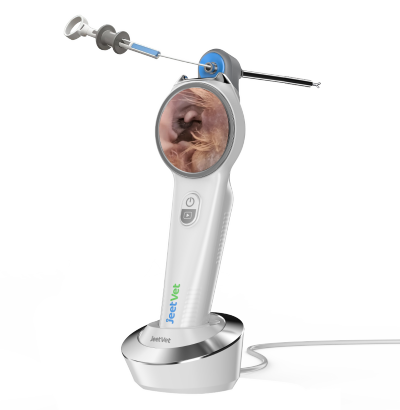
The veterinary team performed upper gastrointestinal endoscopy using the JeetVet RAE-105 portable veterinary endoscope.
- ▪️General anesthesia administered
- ▪️Endoscope inserted through the oral cavity into the esophagus
- ▪️Examination of the stomach and pyloric region
- ▪️Continuous insufflation for clear visualization
- ▪️Identification of a large compacted gastric hairball
Key Findings
- Large trichobezoar (hairball) identified inside the stomach
- Gastric mucosal irritation observed
- Partial gastric outlet obstruction detected
The hairball was successfully fragmented and removed using endoscopic retrieval tools.
Why Veterinary Endoscopy Was Important
1. Minimally Invasive Treatment
The procedure avoided abdominal surgery and significantly reduced patient trauma.
2. Accurate Visualization
The endoscope provided:
- Clear identification of the obstruction
- Evaluation of gastric mucosal condition
- Precise localization of the lesion
3. Faster Recovery
Compared with surgical gastrotomy:
- Less postoperative pain
- Faster return to eating
- Shorter hospitalization
4. Diagnostic Advantage
Endoscopy also helped rule out:
- Gastric tumors
- Foreign bodies
- Severe ulceration
- Pyloric abnormalities
Veterinary Endoscopy vs Traditional Surgery
| Comparison | Veterinary Endoscopy | Traditional Surgery |
|---|---|---|
| Trauma | Minimally invasive | Abdominal incision required |
| Pain Level | Mild | Higher postoperative pain |
| Recovery Time | Fast | Longer recovery |
| Hospital Stay | Short | Longer hospitalization |
| Diagnostic Capability | Direct visualization | Limited before surgery |
How JeetVet Endoscope Helped
The JeetVet RAE-105 portable veterinary endoscope provided several clinical advantages:
- ▪️Slim insertion tube suitable for feline patients
- ▪️High-definition imaging
- ▪️Flexible maneuverability
- ▪️2.0 mm working channel for retrieval instruments
- ▪️Portable connection to mobile devices and computers
Suitable for:
- ▪️Gastrointestinal foreign body removal
- ▪️Gastric examination
- ▪️Biopsy procedures
- ▪️Minimally invasive gastrointestinal treatment
Treatment Outcome
- Vomiting significantly improved
- Appetite gradually returned
- Activity level increased
- Rapid recovery with minimal discomfort
The cat was discharged shortly after postoperative monitoring.
Clinical Value of Veterinary Endoscopy
Compared with traditional surgery, veterinary endoscopy offers:
- ▪️Earlier diagnosis
- ▪️Lower complication rates
- ▪️Reduced trauma
- ▪️Faster patient recovery
- ▪️Improved clinical efficiency
Portable endoscopy systems also improve:
- ▪️Diagnostic capability
- ▪️Treatment versatility
- ▪️Cost-effectiveness for veterinary clinics
Conclusion
Chronic vomiting in cats should never be overlooked.
Veterinary endoscopy provides a safe and highly effective solution for diagnosing and treating gastric hairball obstruction, enabling:
- ▪️Accurate visualization
- ▪️Minimally invasive removal
- ▪️Faster recovery
- ▪️Improved patient outcomes
Modern veterinary gastrointestinal endoscopy is becoming an essential tool in advanced feline medicine.