Dog Swallowed a Chicken Bone — Safe Esophageal Foreign Body Removal Using Veterinary Endoscopy
Foreign body ingestion is one of the most common emergencies encountered in small animal practice. Among these cases, chicken bones pose a particularly high risk due to their sharp edges, which can become lodged in the esophagus and potentially cause perforation, bleeding, or severe infection.
This case highlights how veterinary endoscopy enabled the successful removal of an impacted chicken bone from a dog’s esophagus, avoiding invasive surgery and allowing rapid recovery.
Case Background
- Species: Dog
- Gender: Male
- Age: 4 Years Old
Chief Complaint
- Repeated gagging
- Difficulty swallowing
- Excessive drooling
- Refusal to eat
- Signs of discomfort after eating chicken leftovers
The owner reported that the dog had accessed cooked chicken bones during a family meal. Symptoms appeared shortly afterward and progressively worsened.
Clinical Challenge
Chicken bones can become firmly lodged within the esophagus, creating several serious risks:
- ▪️Esophageal obstruction
- ▪️Mucosal laceration
- ▪️Perforation of the esophageal wall
- ▪️Mediastinal infection
- ▪️Life-threatening complications if untreated
Traditional surgical intervention can be invasive and associated with prolonged recovery. Therefore, minimally invasive retrieval was considered the preferred option.
Endoscopic Examination Procedure
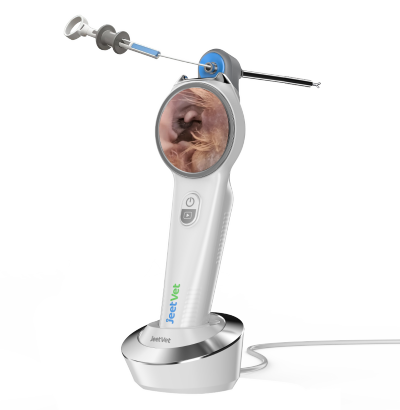
The veterinary team performed upper gastrointestinal endoscopy using the JeetVet RAE-105 portable veterinary endoscope.
- General anesthesia administered
- Endoscope introduced through the oral cavity
- Esophagus carefully examined
- Foreign body identified and evaluated
- Endoscopic retrieval forceps introduced through the working channel
- Chicken bone extracted under direct visualization
The procedure was completed smoothly without the need for surgery.
Key Findings
- Large chicken bone lodged in the mid-esophagus
- Localized inflammation around the foreign body
- Mild mucosal swelling
- No evidence of perforation
The bone was securely grasped and removed using endoscopic retrieval instruments.
Post-removal inspection confirmed that the esophageal wall remained intact and no active bleeding was observed.
Why Veterinary Endoscopy Was Critical
1. Direct Visualization
The endoscope allowed veterinarians to:
- Locate the exact position of the bone
- Assess tissue damage
- Perform controlled extraction
2. Minimally Invasive Treatment
- No surgical incision required
- Reduced patient stress
- Lower complication risk
- Shorter hospitalization time
3. Immediate Therapeutic Intervention
Diagnosis and treatment were completed during a single procedure, significantly improving clinical efficiency.
Veterinary Endoscopy vs Traditional Surgery
| Comparison | Veterinary Endoscopy | Traditional Surgery |
|---|---|---|
| Procedure Type | Minimally invasive | Open surgery |
| Recovery Time | Fast | Longer |
| Patient Trauma | Low | High |
| Complication Risk | Reduced | Higher |
| Hospital Stay | Short | Extended |
How JeetVet Endoscope Helped
The JeetVet RAE-105 portable veterinary endoscope offered several advantages during this procedure:
- ▪️5.8 mm slim insertion tube suitable for small animal patients
- ▪️120° field of view for comprehensive examination
- ▪️2.0 mm working channel for retrieval instruments
- ▪️Portable design supporting phone and computer connectivity
- ▪️Flexible articulation for precise maneuverability
▪️Ideal applications include:
- ▪️Foreign body retrieval
- ▪️Esophageal examination
- ▪️Gastroscopy
- ▪️Biopsy procedures
- ▪️Minimally invasive diagnostics
Treatment Outcome
- Chicken bone successfully removed
- No perforation observed
- Swallowing function rapidly improved
- Appetite returned within 24 hours
- Patient discharged after routine monitoring
The dog recovered uneventfully without surgical intervention.
Clinical Value of Veterinary Endoscopy
Veterinary endoscopy continues to transform small animal medicine by providing:
- ▪️Earlier diagnosis
- ▪️Minimally invasive treatment
- ▪️Improved patient outcomes
- ▪️Enhanced clinical efficiency
- ▪️Reduced treatment costs
For veterinary clinics, portable endoscopy systems are becoming essential tools for managing emergency foreign body cases safely and effectively.
Conclusion
Chicken bone ingestion can quickly become a serious medical emergency in dogs.
Veterinary endoscopy provides a safe, effective, and minimally invasive solution for foreign body retrieval, helping veterinarians avoid unnecessary surgery while improving patient recovery and clinical outcomes.
Modern portable systems such as the JeetVet RAE-105 veterinary endoscope are enabling veterinary professionals to perform advanced diagnostic and therapeutic procedures with greater confidence and efficiency.