Dog Wouldn't Stop Sneezing — Veterinary Endoscopy Revealed a Hidden Grass Awn Deep in the Nasal Cavity
Persistent sneezing in dogs is often attributed to allergies, respiratory infections, or environmental irritants. However, in some cases, the underlying cause may be a nasal foreign body hidden deep within the nasal passages.
Grass awns, commonly known as foxtails or grass seeds, are among the most frequently encountered nasal foreign bodies in dogs. Due to their barbed structure, they can migrate deeper into the nasal cavity and cause chronic irritation, infection, and even tissue damage.
This case demonstrates how veterinary rhinoscopy using a portable endoscope enabled the successful diagnosis and removal of a grass awn lodged deep inside a dog's nasal cavity.
Case Background
- Species: Dog
- Gender: Female
- Age: 3 Years Old
Chief Complaint
- Persistent sneezing for more than two weeks
- Occasional nosebleeds
- Unilateral nasal discharge
- Pawing at the nose
- Discomfort during breathing
The owner reported that symptoms began shortly after outdoor activities in a grassy field.
Clinical Challenge
Nasal foreign bodies can be difficult to diagnose because:
- ▪️The nasal cavity is narrow and complex
- ▪️Foreign bodies may migrate deep into the nasal passages
- ▪️External examination provides limited information
- ▪️Symptoms often resemble respiratory disease
Possible differential diagnoses included:
- Nasal foreign body
- Rhinitis
- Fungal infection
- Nasal polyp
- Nasal neoplasia
Direct visualization was required to establish an accurate diagnosis.
Veterinary Rhinoscopy Procedure
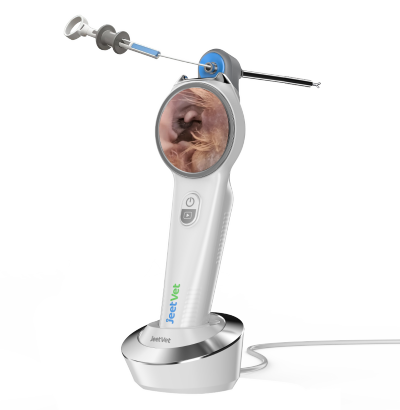
The veterinary team performed rhinoscopy using the JeetVet RAE-109 portable veterinary endoscope.
- ▪️General anesthesia administered
- ▪️Endoscope introduced into the affected nostril
- ▪️Systematic examination of the nasal cavity
- ▪️Identification of foreign material
- ▪️Endoscopic retrieval using grasping forceps
The procedure was completed within a short period and required no surgical incision.
Endoscopic Findings
- Grass awn lodged deep within the nasal passage
- Localized inflammation and swelling
- Mild mucosal bleeding
- No evidence of extensive tissue damage
The foreign body was carefully grasped and removed under direct endoscopic visualization.
A follow-up examination confirmed complete removal of the grass awn.
Why Veterinary Endoscopy Was Critical
1. Accurate Diagnosis
The endoscope provided direct visualization of the foreign body and surrounding tissue.
- Precise localization
- Clear identification of the cause
- Immediate confirmation of diagnosis
2. Minimally Invasive Treatment
- No surgical exploration required
- Reduced patient trauma
- Lower risk of complications
- Rapid recovery
3. Immediate Resolution
Diagnosis and treatment were completed during a single procedure, improving efficiency and reducing patient stress.
Veterinary Rhinoscopy vs Traditional Examination
| Comparison | Veterinary Endoscopy | Traditional Examination |
|---|---|---|
| Visualization | Direct internal visualization | Limited external observation |
| Diagnostic Accuracy | High | Often inconclusive |
| Foreign Body Removal | Direct retrieval | Difficult |
| Patient Trauma | Minimal | May require surgery |
| Recovery Time | Fast | Longer |
How JeetVet RAE-109 Helped
The JeetVet RAE-109 portable veterinary endoscope was particularly suitable for this procedure because of:
- ▪️Slim insertion tube designed for narrow anatomical structures
- ▪️High-definition imaging for accurate diagnosis
- ▪️Flexible maneuverability within the nasal cavity
- ▪️Portable design compatible with phone and computer display
- ▪️Working channel for retrieval instruments
Ideal applications include:
- ▪️Rhinoscopy
- ▪️Nasal foreign body removal
- ▪️Upper respiratory examination
- ▪️Nasal biopsy procedures
- ▪️Chronic sneezing investigations
Treatment Outcome
- Grass awn completely removed
- Sneezing resolved within days
- Nasal discharge disappeared
- Breathing returned to normal
- No recurrence during follow-up
The patient recovered quickly without requiring invasive surgery.
Clinical Value of Veterinary Endoscopy
Veterinary rhinoscopy is becoming an essential diagnostic and therapeutic tool for companion animal practice.
- ▪️Earlier diagnosis of hidden nasal diseases
- ▪️Minimally invasive foreign body removal
- ▪️Improved treatment outcomes
- ▪️Reduced patient discomfort
- ▪️Enhanced clinical efficiency
Portable veterinary endoscopy systems allow clinics to manage respiratory cases with greater confidence and precision.
Conclusion
Persistent sneezing should never be ignored, especially when symptoms develop after outdoor activity.
Veterinary endoscopy provides a highly effective solution for diagnosing and removing hidden nasal foreign bodies, enabling accurate diagnosis, minimally invasive treatment, and rapid recovery.
Portable systems such as the JeetVet RAE-109 veterinary endoscope are helping veterinary professionals deliver safer and more efficient respiratory care for companion animals.