Hidden Danger in the Stomach: How a Veterinary Endoscope Helped Remove a Dog’s Gastric Foreign Body
Foreign body ingestion is a common emergency in small animal practice. In many cases, symptoms such as vomiting or loss of appetite may appear mild at first, but the underlying cause can be more serious. This case demonstrates how a veterinary endoscope helped quickly identify and remove a gastric foreign body in a dog, avoiding invasive surgery.
A Dog with Persistent Vomiting
A 4-year-old mixed-breed dog was brought to a veterinary clinic after experiencing repeated vomiting for more than a week. Initially, the owner suspected a minor digestive problem and tried dietary adjustments. However, the symptoms gradually worsened.
The dog also showed several additional signs:
- ▪️Reduced appetite
- ▪️Mild lethargy
- ▪️Occasional abdominal discomfort
Routine blood tests showed no major abnormalities. However, due to the persistent symptoms, the veterinarian suspected a possible gastrointestinal obstruction and decided to perform a veterinary gastroscopy for further investigation.
Endoscopic Examination Revealed the Problem
Using a flexible veterinary endoscope, the veterinarian carefully examined the esophagus and stomach. During the procedure, a small rubber-like object was discovered lodged in the stomach.
The object was partially hidden between the gastric folds, making it difficult to detect using traditional diagnostic methods. Fortunately, the endoscopic system provided clear visualization of the stomach lining and the foreign material.
The veterinarian was able to:
- ▪️Locate the exact position of the foreign body
- ▪️Assess irritation of the gastric mucosa
- ▪️Evaluate whether tissue damage had occurred
The gastric lining showed only mild inflammation, suggesting the condition had been detected early.
Minimally Invasive Removal with Endoscopic Tools
After confirming the diagnosis, the veterinarian inserted retrieval forceps through the working channel of the veterinary endoscope. The foreign body was carefully grasped and removed through the endoscope.
The procedure was completed quickly under general anesthesia, without the need for surgical intervention.
Compared with traditional surgery, endoscopic foreign body removal offers several advantages:
- ▪️No surgical incision
- ▪️Reduced anesthesia time
- ▪️Faster recovery
- ▪️Lower risk of complications
▪️The dog recovered well and was discharged the next day.
The Role of Portable Veterinary Endoscopy
Cases like this highlight the growing importance of veterinary endoscopy systems in modern veterinary practice. With advanced imaging technology, veterinarians can directly visualize internal organs and diagnose conditions that may otherwise remain hidden.
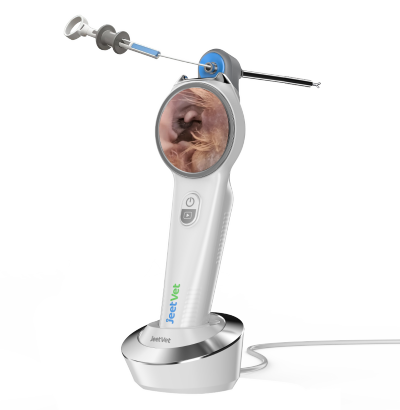
Portable systems developed by JeetVet allow clinics to perform gastrointestinal examinations and minimally invasive procedures efficiently in daily practice.
Modern portable veterinary endoscopes typically provide:
- ▪️High-resolution imaging
- ▪️Flexible insertion tubes for small animals
- ▪️Working channels for biopsy or foreign body retrieval
- ▪️Portable design suitable for veterinary clinics
Why Veterinary Endoscopy Is Becoming Essential
Foreign body ingestion remains one of the most common gastrointestinal emergencies in dogs. Traditional diagnostic methods may not always provide definitive results.
With the help of veterinary endoscope technology, veterinarians can diagnose gastrointestinal diseases earlier and perform minimally invasive treatments that improve patient outcomes.
As veterinary medicine continues to evolve, veterinary endoscopy is becoming an essential tool for modern animal hospitals seeking accurate diagnosis and efficient treatment solutions.