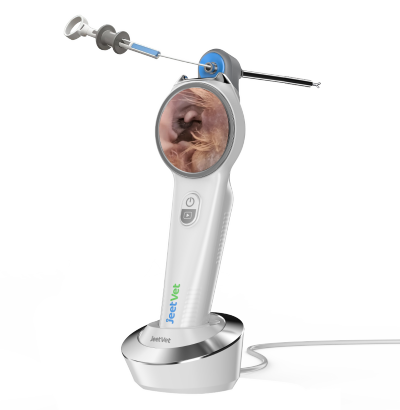
How to Choose the Right Veterinary Endoscope: A Practical Guide for Veterinary Clinics
Choosing the right veterinary endoscope is an important decision for veterinary clinics planning to introduce or expand minimally invasive diagnostic procedures. Different patients, anatomical locations, and clinical applications require different endoscope configurations.
A veterinary endoscope that works well for a large dog may not be the ideal choice for a cat, small dog, or exotic animal. Likewise, an endoscope designed primarily for visualization may have different requirements from one intended for biopsy or foreign body retrieval.
For this reason, veterinarians should look beyond a single specification such as image resolution or price. A practical evaluation should consider diameter, working length, working channel, articulation, image quality, compatibility, portability, and intended clinical applications.
Why Choosing the Right Veterinary Endoscope Matters
Veterinary patients vary significantly in size and anatomy. A suitable endoscope needs to provide an appropriate balance between access, visualization, maneuverability, and instrument capability.
The right system can support procedures such as:
- Gastrointestinal endoscopy
- Foreign body examination and retrieval
- Endoscopic biopsy
- Rhinoscopy
- Respiratory examination
- Selected exotic animal procedures
Selecting equipment according to the actual clinical workflow can help veterinarians make better use of endoscopy technology and avoid purchasing a system that is unsuitable for their primary patient population.
1. Start with the Intended Clinical Application
The first question when selecting a veterinary endoscope should be:
What procedures will the endoscope primarily be used for?
Different applications place different demands on the equipment.
| Application | Important Considerations |
|---|---|
| Gastroscopy | Working length, image quality, articulation, working channel |
| Foreign Body Retrieval | Working channel, instrument compatibility, visualization, maneuverability |
| Endoscopic Biopsy | Working channel diameter, biopsy instrument compatibility, image quality |
| Rhinoscopy | Insertion diameter, flexibility, maneuverability, visualization |
| Respiratory Examination | Insertion diameter, flexibility, image quality, anatomical access |
| Exotic Animal Endoscopy | Small diameter, flexibility, appropriate working length |
Defining the primary application first makes the rest of the purchasing decision much easier.
2. Consider the Insertion Tube Diameter
The outer diameter of the insertion tube is one of the most important specifications of a flexible veterinary endoscope.
A smaller diameter can provide access to narrower anatomical structures and may be particularly important when examining smaller patients or certain exotic animals.
Larger-diameter systems, on the other hand, may provide additional space for working channels and accessories.
Therefore, diameter should be selected according to:
- Patient size
- Target anatomy
- Procedure type
- Required instruments
There is no single diameter that is ideal for every veterinary application.
3. Evaluate the Working Length
Working length determines how far the endoscope can reach while remaining practical for the intended procedure.
For gastrointestinal applications, sufficient working length is important because the endoscope may need to travel through relatively long anatomical pathways.
For nasal or respiratory examinations, different length requirements may apply.
When comparing products, clinics should consider the relationship between:
- Patient size
- Anatomical target
- Insertion tube diameter
- Working length
- Procedure type
4. Don't Overlook the Working Channel
If the veterinary endoscope will be used for biopsy or foreign body retrieval, the working channel becomes particularly important.
The working channel allows compatible instruments to pass through the insertion tube and reach the target area under direct visualization.
Potential accessories include:
- Biopsy forceps
- Foreign body retrieval forceps
- Other compatible endoscopic instruments
The channel diameter must be compatible with the instruments required by the clinic.
A clinic that plans to use endoscopy primarily for diagnostic visualization may have different working channel requirements from a clinic performing frequent biopsy or foreign body procedures.
5. Image Quality Should Be Evaluated as a Complete System
Image resolution is an important specification, but it should not be the only factor used to evaluate a veterinary endoscope.
Clinics should also consider:
- Illumination
- Color reproduction
- Field of view
- Working distance
- Image stability
- Motion performance
Clear imaging is especially valuable when identifying subtle mucosal changes, locating foreign bodies, evaluating abnormal tissue, or positioning biopsy instruments.
In practical clinical use, the complete imaging system matters more than a single resolution number.
6. Articulation and Maneuverability
Flexible endoscopy requires controlled navigation through curved and complex anatomical structures.
The ability to control the distal tip can help the veterinarian position the camera toward the desired area and maintain visualization during examination.
Maneuverability is particularly relevant for:
- Gastrointestinal examinations
- Foreign body localization
- Biopsy procedures
- Nasal examinations
- Respiratory endoscopy
When evaluating a system, clinicians should consider not only the stated articulation range but also how intuitive and responsive the control feels during actual operation.
7. Flexible Veterinary Endoscope or Rigid Endoscope?
The choice between flexible and rigid endoscopy depends on the intended application.
Flexible veterinary endoscopes can navigate curved anatomical pathways and are commonly considered for gastrointestinal and selected respiratory applications.
Rigid endoscopes can also be valuable for specific procedures where a straight optical path is appropriate.
Therefore, the question should not be which technology is universally better, but rather:
Which endoscope configuration best matches the procedure and patient population?
8. Portability and Clinical Workflow
Traditional endoscopy systems may require dedicated processors, monitors, and supporting equipment. For some veterinary practices, portability can be an important consideration.
A portable veterinary endoscope may provide greater flexibility for:
- Different examination rooms
- Smaller veterinary practices
- Mobile veterinary services
- Emergency procedures
- Training and demonstration
However, portability should not be evaluated separately from image quality, instrument compatibility, durability, and workflow.
9. Consider Patient Size and Species
A veterinary endoscope should be selected with the intended patient population in mind.
Dogs and cats range from very small patients to large breeds, while exotic animal patients may have substantially different anatomical requirements.
For this reason, clinics that treat a wide range of species may benefit from having access to different endoscope configurations rather than relying on a single universal system.
Important factors include:
- Patient body size
- Anatomical diameter
- Target organ
- Required working length
- Required accessories
10. Cleaning, Reprocessing, and Maintenance
Clinical performance is only one part of endoscope selection. Cleaning and maintenance are equally important considerations for veterinary practices.
Before purchasing a veterinary endoscope, clinics should understand the manufacturer's instructions regarding:
- Cleaning
- Disinfection
- Drying
- Storage
- Routine inspection
- Accessory compatibility
Following the manufacturer's validated reprocessing and maintenance instructions is essential for protecting the equipment and supporting appropriate infection-control practices.
Veterinary Endoscope Selection Checklist
| Question | What to Consider |
|---|---|
| What procedures will be performed? | Gastroscopy, rhinoscopy, biopsy, foreign body retrieval, etc. |
| What patients are treated? | Large dogs, small dogs, cats, exotic animals, or mixed patients |
| What diameter is required? | Balance anatomical access with instrument capability |
| Is a working channel required? | Important for biopsy and foreign body retrieval |
| How much articulation is needed? | Consider the complexity of the intended anatomy |
| What image quality is required? | Evaluate resolution, illumination, color, and stability together |
| Is portability important? | Consider available space and clinical workflow |
| What accessories are required? | Confirm compatibility before purchase |
How JeetVet Supports Different Veterinary Endoscopy Applications
JeetVet develops veterinary endoscope solutions for companion animals and exotic animal applications, with different configurations designed to address different clinical requirements.
Depending on the model, JeetVet veterinary endoscopy solutions can support applications including:
- Gastrointestinal examination
- Foreign body localization and retrieval
- Endoscopic biopsy
- Rhinoscopy
- Respiratory examination
- Exotic animal endoscopy
The goal is not simply to provide a camera inside the body. A practical veterinary endoscopy system should combine appropriate access, clear visualization, controlled maneuverability, working channel capability, and convenient clinical operation.
By selecting the configuration according to actual clinical needs, veterinary practices can make better use of minimally invasive diagnostic technology.
Conclusion
Choosing the right veterinary endoscope requires more than comparing price or image resolution.
The most important factors include:
- Intended clinical application
- Insertion tube diameter
- Working length
- Working channel
- Image quality
- Articulation and maneuverability
- Patient size and species
- Portability
- Accessory compatibility
- Cleaning and maintenance requirements
A well-matched veterinary endoscope can become a versatile tool for minimally invasive examination, diagnosis, biopsy, and selected therapeutic procedures.
For veterinary clinics evaluating endoscopy equipment, the best choice is ultimately the system that matches the clinic's patients, procedures, workflow, and long-term clinical goals.