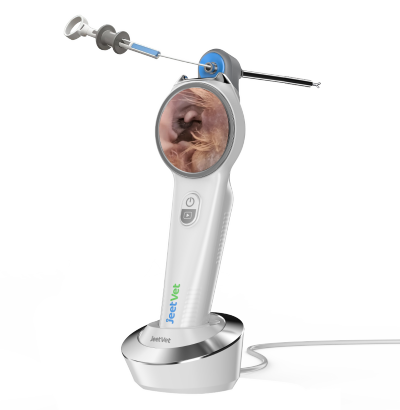
JeetVet Clinical Case | Labrador Swallows a Dangerous Toy: Minimally Invasive Endoscopic Removal Avoids Open Surgery
When a dog accidentally swallows a foreign object, every second can matter. Delayed treatment may result in gastrointestinal obstruction, tissue damage, perforation, or other life-threatening complications.
Recently, a Labrador retriever developed a severe gastrointestinal obstruction after swallowing part of a rubber toy. The dog was lethargic, vomiting continuously, and unable to eat.
Under the care of Dr. Li Yan and her veterinary team at Nanyang Pet Medical Center, the foreign object was accurately located using the JeetVet RAE-105 veterinary endoscope. The team successfully removed the dangerous toy through a minimally invasive endoscopic procedure, helping the dog avoid open surgery and recover safely.
Case Background
The patient was a Labrador retriever brought to the veterinary hospital with several concerning symptoms:
- Severe lethargy
- Persistent vomiting
- Loss of appetite
- Inability to eat normally
- Suspected gastrointestinal obstruction
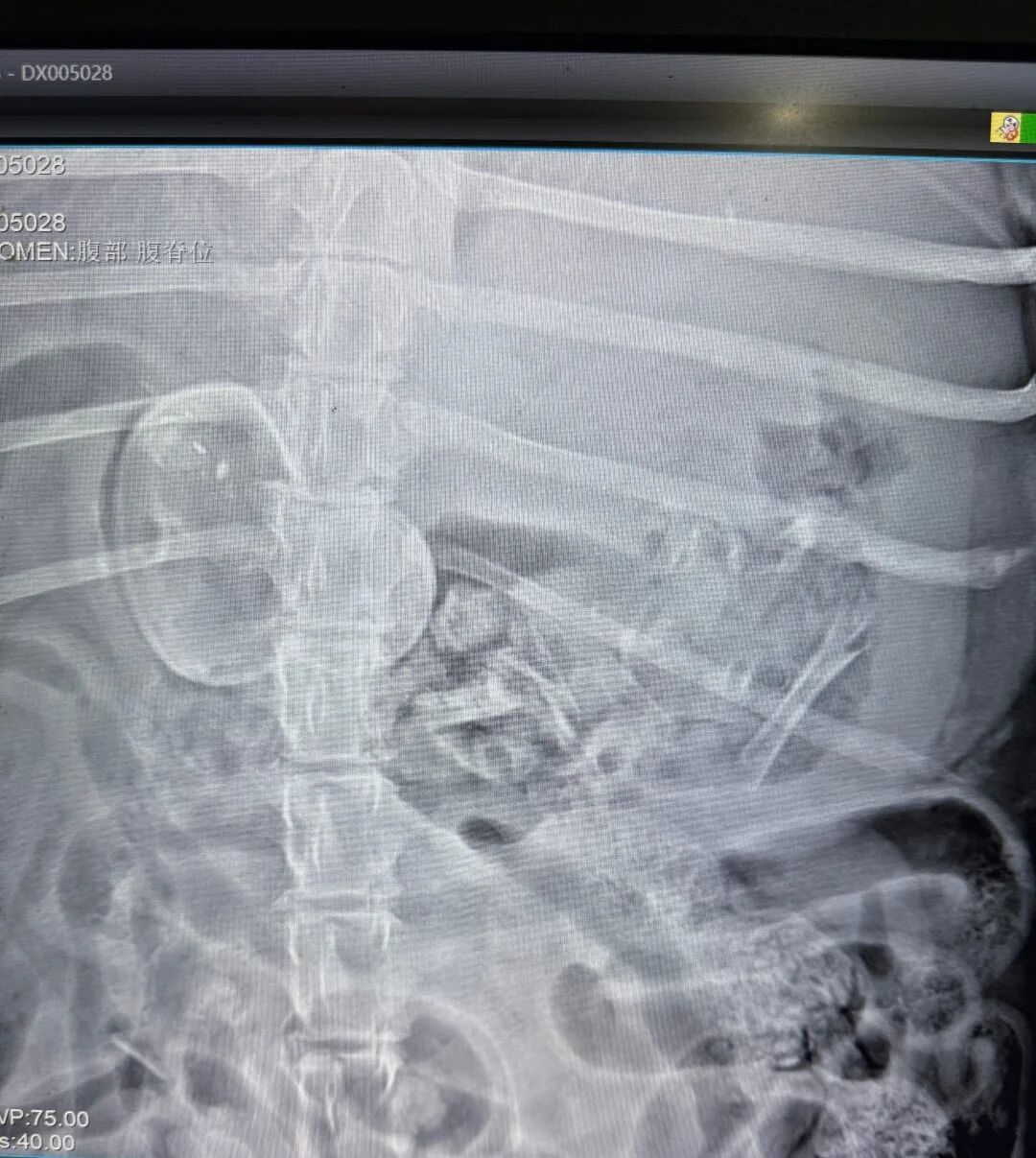
An abdominal X-ray revealed a suspicious foreign object within the gastrointestinal tract. The object appeared similar to a component from a rubber toy and had already caused an obstruction.
Because the dog was unable to keep food down and its general condition was deteriorating, immediate intervention was required.
Diagnostic Imaging and Endoscopic Examination
X-Ray Findings
The abdominal radiograph clearly showed the dog’s vertebral column and a suspicious foreign-body shadow in the middle abdominal region.
The surrounding intestinal loops appeared distended with gas, indicating a possible complete or partial gastrointestinal obstruction.
A gastrointestinal obstruction caused by a swallowed toy may lead to:
- Continuous vomiting
- Severe dehydration
- Electrolyte imbalance
- Inflammation and mucosal damage
- Pressure-related tissue injury
- Gastrointestinal perforation
- Secondary infection or peritonitis
Traditional open abdominal surgery can involve greater tissue trauma, a larger incision, postoperative discomfort, and a longer recovery period.
The veterinary team therefore evaluated whether the foreign object could be safely removed through a minimally invasive endoscopic procedure.
Endoscopic Examination
The veterinary team performed an examination using the JeetVet RAE-105 flexible veterinary endoscope.
The endoscope was introduced through the dog’s natural gastrointestinal pathway, allowing the veterinarian to inspect anatomical areas that could not be directly visualized through conventional examination methods.
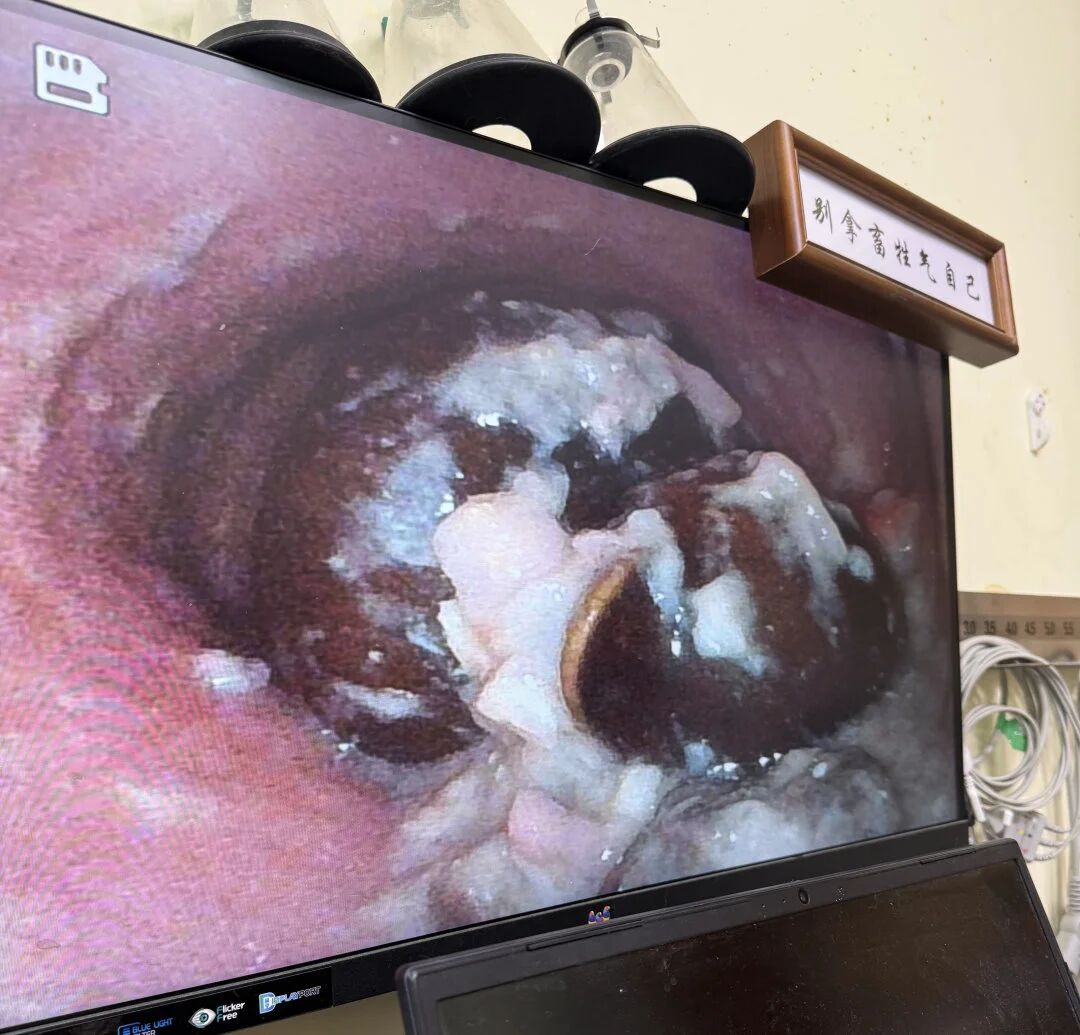
High-definition images were transmitted in real time through the image processor. The veterinary team clearly identified the foreign object and observed redness, swelling, and inflammation in the surrounding mucosa.
The high-resolution images provided by the RAE-105 allowed the veterinarian to assess:
- The exact location of the foreign body
- The size and shape of the swallowed object
- The condition of the surrounding mucosa
- The degree of obstruction
- Whether endoscopic retrieval could be performed safely
After evaluating the endoscopic findings, the team confirmed that the rubber toy component could be removed through the mouth without performing open abdominal surgery.
Minimally Invasive Treatment Plan
Under the high-definition visualization provided by the JeetVet RAE-105 veterinary endoscope, the veterinary team decided to perform minimally invasive foreign-body retrieval.
The endoscope provided a clear, real-time view throughout the procedure, allowing the veterinarian to accurately control the retrieval instrument while avoiding unnecessary contact with the gastrointestinal wall.
Through the endoscope’s working channel, the veterinarian introduced compatible foreign-body retrieval forceps and carefully secured the rubber toy component.
The foreign object was then successfully removed in one piece.
This minimally invasive approach allowed the veterinary team to complete diagnosis and treatment during the same procedure.
Postoperative Recovery
After the procedure, the Labrador was transferred to the intensive care unit for observation and supportive treatment.
Postoperative care included:
- Anti-infective therapy
- Intravenous fluid support
- Nutritional support
- Gastrointestinal monitoring
- Continuous observation of the dog’s general condition
The dog soon regained its appetite, and its energy level improved significantly.
Thanks to timely diagnosis and minimally invasive endoscopic treatment, the Labrador recovered without undergoing open abdominal surgery.
Core Advantages of the JeetVet RAE-105 Veterinary Endoscope
1. High-Definition Image Processor
The RAE-105 provides clear, real-time images on a large display, allowing veterinarians to clearly visualize foreign objects, mucosal inflammation, redness, swelling, and tissue damage.
High-definition imaging supports accurate clinical assessment and provides reliable visual guidance during foreign-body retrieval.
2. Slim Insertion Tube and Flexible Angulation
The slim and flexible insertion tube can pass through the esophagus and stomach while navigating curved anatomical regions such as the pylorus and duodenum.
Flexible angulation helps veterinarians inspect difficult-to-access areas of the upper gastrointestinal tract while maintaining procedural control.
3. Integrated Working Channel
The integrated working channel supports compatible endoscopic instruments, including:
- Foreign-body retrieval forceps
- Biopsy forceps
- Retrieval baskets
- Sampling accessories
- Irrigation and suction accessories
This working-channel design enables veterinarians to combine examination, sampling, and treatment during a single minimally invasive procedure.
Why Dogs Commonly Swallow Foreign Objects
Foreign-body ingestion is a common veterinary emergency, particularly among young, active, and curious dogs.
Dogs frequently explore objects using their mouths and may accidentally swallow items while chewing or playing.
Common gastrointestinal foreign bodies include:
- Rubber toys
- Balls and toy components
- Fabric and socks
- Plastic fragments
- Bones
- Fishing hooks
- Food packaging
- Stones and other household objects
Some objects may remain in the stomach, while others may move into the intestinal tract and cause partial or complete obstruction.
Pet owners should seek immediate veterinary attention if a dog develops repeated vomiting, loss of appetite, abdominal discomfort, lethargy, or difficulty passing stool after possibly swallowing an object.
Benefits of Endoscopic Foreign-Body Retrieval
When the foreign body is located within an area that can be safely reached using a veterinary endoscope, endoscopic retrieval may provide a minimally invasive alternative to surgery.
Potential benefits include:
- No abdominal incision
- Reduced tissue trauma
- Direct visualization of the foreign object
- Controlled retrieval under real-time imaging
- Less postoperative discomfort
- Faster recovery in suitable cases
- Shorter hospitalization
- Simultaneous examination of the surrounding mucosa
However, not every foreign body can be removed endoscopically. The final treatment method depends on several clinical factors.
| Clinical Factor | Why It Matters |
|---|---|
| Foreign-body location | The object must be reachable through the endoscope and natural gastrointestinal pathway. |
| Object size and shape | Large, sharp, irregular, or firmly embedded objects may require alternative treatment. |
| Duration of obstruction | Long-standing obstruction may increase inflammation, tissue damage, and perforation risk. |
| Condition of surrounding tissue | Severe injury, necrosis, or perforation may require surgical intervention. |
| Patient stability | The veterinarian must consider the animal’s overall health and ability to undergo anesthesia. |
The Clinical Value of Veterinary Endoscopy
Veterinary endoscopy allows clinicians to directly observe internal anatomical structures through natural body openings. This provides information that may not be fully available through physical examination or diagnostic imaging alone.
In gastrointestinal foreign-body cases, a veterinary endoscope can help the clinical team:
- Confirm the presence of a foreign object
- Determine its exact position
- Evaluate surrounding mucosal damage
- Assess whether minimally invasive retrieval is possible
- Remove suitable foreign objects under direct visualization
- Reinspect the area after removal
By combining high-definition visualization with compatible retrieval instruments, veterinary endoscopy supports both diagnosis and treatment.
Conclusion
This clinical case demonstrates the value of veterinary endoscopy in diagnosing and treating gastrointestinal foreign bodies.
With high-definition imaging, flexible navigation, and an integrated working channel, the JeetVet RAE-105 veterinary endoscope helped the veterinary team accurately locate and successfully remove the swallowed rubber toy through a minimally invasive procedure.
The timely intervention helped the Labrador avoid open abdominal surgery and supported a faster postoperative recovery.
For veterinary clinics and animal hospitals, a reliable endoscopy system can transform certain foreign-body emergencies from major surgical cases into controlled, minimally invasive procedures.
Clear visualization supports accurate clinical decisions, while timely endoscopic treatment can help protect an animal’s life.