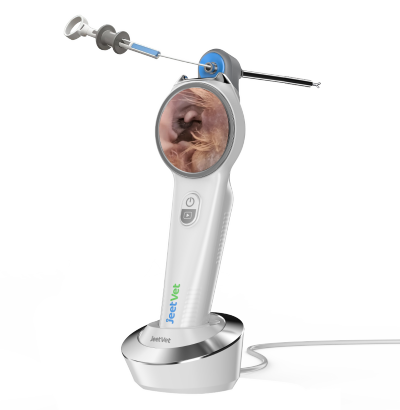
Veterinary Endoscope for Horses: How Equine Respiratory Endoscopy Supports Airway Examination
Respiratory health can have a significant impact on a horse's comfort, exercise tolerance, and athletic performance. However, many structures within the upper airway cannot be fully evaluated through external examination alone.
A veterinary endoscope allows veterinarians to directly visualize accessible portions of the equine respiratory tract in real time. This makes equine respiratory endoscopy an important diagnostic tool when investigating abnormal respiratory noise, nasal discharge, coughing, reduced performance, and other respiratory concerns.
For equine veterinarians, the value of endoscopy is not simply seeing inside the airway. It provides an opportunity to evaluate anatomical structures directly, document visible findings, and integrate those observations with the horse's history, physical examination, and other diagnostic results.
What Is Equine Respiratory Endoscopy?
Equine respiratory endoscopy is an examination technique in which a suitable flexible endoscope is introduced to visualize accessible structures within the horse's respiratory tract.
The endoscope contains an imaging system and illumination source at or near the distal end, allowing the veterinarian to observe internal structures on a monitor or connected display.
Depending on the clinical objective and equipment configuration, a veterinary endoscope for horses may be used to examine areas such as:
- Nasal passages
- Nasopharyngeal region
- Pharyngeal structures
- Laryngeal region
- Accessible portions of the trachea
The exact examination approach depends on the clinical indication, the horse, the equipment being used, and the veterinarian's professional judgment.
When Might a Horse Need Respiratory Endoscopy?
There is no single symptom that automatically means a horse requires endoscopy. Instead, veterinarians may consider equine endoscopy when clinical history and examination suggest that direct airway visualization could provide useful additional information.
Reasons for further respiratory investigation may include:
- Abnormal respiratory noise
- Persistent or recurrent coughing
- Nasal discharge
- Exercise intolerance
- Unexpected decline in athletic performance
- Difficulty breathing
- Difficulty swallowing
- Suspected upper airway abnormalities
These signs can have many different causes. Endoscopy should therefore be considered as one part of a broader diagnostic workup rather than a standalone diagnosis.
Why Direct Airway Visualization Matters
A major advantage of a veterinary endoscope is direct visualization.
External observation, auscultation, laboratory testing, and diagnostic imaging can all provide valuable information, but they do not necessarily replace the information obtained by directly viewing accessible airway structures.
During an endoscopic examination, the veterinarian may assess visible features such as:
- Mucosal appearance
- Airway symmetry
- Secretions
- Visible inflammation
- Abnormal tissue
- Structural changes
- Foreign material where accessible
These findings must be interpreted together with the horse's clinical presentation and other diagnostic information.
Equine Endoscopy and Poor Athletic Performance
Respiratory function is particularly important in performance horses. When a horse demonstrates unexplained exercise intolerance or a decline in performance, the upper airway may be one area considered during the diagnostic investigation.
An equine endoscope can allow the veterinarian to inspect visible airway structures and identify findings that may warrant further investigation.
However, it is important to distinguish between examination at rest and airway behavior during exercise. Some functional abnormalities may be intermittent or become apparent only under specific conditions.
For this reason, the type of endoscopic examination should be selected according to the suspected problem and the veterinarian's assessment.
Static and Dynamic Equine Airway Examination
Equine respiratory endoscopy may be performed under different conditions depending on the clinical question.
| Approach | General Purpose |
|---|---|
| Resting Endoscopy | Allows direct examination of accessible airway structures while the horse is at rest. |
| Dynamic Examination | May be considered when the suspected airway problem is associated with exercise or performance. |
These approaches are not interchangeable. The appropriate examination depends on the horse's clinical signs and the specific question the veterinarian is trying to answer.
The Role of Image Quality in Equine Respiratory Endoscopy
Clear visualization is important when examining airway structures. Resolution is one consideration, but practical endoscopic image quality depends on several factors working together.
These include:
- Image resolution
- Illumination
- Color reproduction
- Field of view
- Working distance
- Image stability
- Lens cleanliness during examination
Appropriate illumination is particularly important because the internal airway is naturally dark, while excessive glare or reflections can also reduce useful visibility.
A practical equine veterinary endoscope should therefore provide balanced visualization rather than relying on resolution specifications alone.
Why Working Length Matters for Horses
Working length is an important consideration when choosing a veterinary endoscope for large animals.
Compared with many companion animal procedures, equine examinations can require greater reach because of the horse's larger anatomy.
The appropriate working length depends on:
- The anatomical target
- The intended examination
- The size of the patient
- The required maneuverability
- The clinical environment
A longer endoscope is not automatically better. The goal is to have sufficient reach for the intended procedure while maintaining practical handling and control.
Insertion Diameter and Maneuverability
Insertion tube diameter is another important factor in equine endoscopy.
The diameter should be appropriate for the anatomical pathway being examined while providing the imaging and functional capabilities required for the procedure.
At the same time, distal tip articulation can help the veterinarian navigate the anatomy and direct the field of view toward specific structures.
When evaluating an equine endoscope, it is useful to consider the relationship between:
- Insertion diameter
- Working length
- Flexibility
- Articulation range
- Control responsiveness
Does the Working Channel Matter?
For visualization-only examinations, imaging and maneuverability may be the primary considerations. For procedures that require sampling or other compatible instruments, the working channel becomes more important.
Depending on the specific endoscope and clinical application, a working channel may support compatible instruments or sampling procedures.
When selecting a veterinary endoscope with a working channel, veterinarians should evaluate:
- Working channel diameter
- Compatible instrument dimensions
- Intended sampling procedures
- Effect of the channel on overall insertion tube diameter
Accessory compatibility should always be confirmed for the specific endoscope system before clinical use.
Portable Equine Endoscopy for Field Practice
Unlike many companion animal veterinarians, equine practitioners frequently travel to the patient rather than bringing every patient into a hospital.
Horses may be examined at:
- Farms
- Stables
- Breeding facilities
- Training centers
- Equestrian facilities
This makes portability particularly relevant when selecting an equine endoscope.
A portable veterinary endoscopy system may simplify transportation and setup in different clinical environments. Depending on the system, image and video recording can also support documentation, case review, and communication.
However, portability should always be considered together with imaging performance, durability, working length, maneuverability, and reprocessing requirements.
Choosing a Veterinary Endoscope for Equine Airway Examination
There is no single specification that determines whether an endoscope is suitable for equine respiratory work.
Veterinarians should evaluate the complete system according to the intended procedure.
| Feature | Why It Matters |
|---|---|
| Working Length | Provides appropriate reach for the intended equine examination. |
| Insertion Diameter | Should match the anatomical pathway and procedure. |
| Articulation | Supports navigation and positioning of the distal tip. |
| Image Quality | Supports visualization of airway structures and mucosal appearance. |
| Illumination | Provides visibility within dark anatomical spaces. |
| Working Channel | May support compatible instruments when required. |
| Portability | Can be particularly useful for mobile equine practice. |
| Documentation | Image and video recording can support clinical records and case review. |
Veterinary Endoscopy as Part of a Complete Equine Respiratory Workup
Endoscopy provides valuable visual information, but respiratory evaluation should not depend on endoscopic appearance alone.
Depending on the clinical presentation, the veterinarian may integrate endoscopy with:
- Clinical history
- Physical examination
- Respiratory auscultation
- Laboratory testing
- Appropriate diagnostic imaging
- Sampling procedures when indicated
- Exercise-related assessment when relevant
The objective is to combine direct visualization with other clinical information to develop a more complete understanding of the horse's respiratory condition.
How JeetVet Supports Large Animal Veterinary Endoscopy
JeetVet develops veterinary endoscope solutions for different animal sizes, clinical applications, and working environments.
For large animal and equine applications, important equipment considerations include appropriate working length, clear visualization, flexible maneuverability, portability, and practical clinical operation.
Because respiratory, gastrointestinal, and other large animal procedures can have very different equipment requirements, veterinarians should select the endoscope configuration according to the species, anatomical target, and intended procedure rather than relying on a single universal specification.
This application-oriented approach can help veterinary professionals identify an endoscopy solution that better matches their clinical workflow, whether examinations are performed in a veterinary hospital, stable, farm, or other field environment.
Conclusion
A veterinary endoscope for horses provides direct visualization of accessible airway structures and can be an important component of equine respiratory examination.
From investigating abnormal respiratory noise and nasal discharge to supporting the evaluation of horses with unexplained performance concerns, equine respiratory endoscopy can provide information that may not be available through external examination alone.
Choosing the right equipment requires more than simply selecting a long endoscope. Working length, insertion diameter, articulation, image quality, illumination, working channel capability, portability, and clinical workflow should all be considered.
Used as part of a complete diagnostic approach, equine endoscopy can support veterinarians in examining the respiratory tract with direct, real-time visualization while expanding the role of minimally invasive diagnostics in large animal medicine.