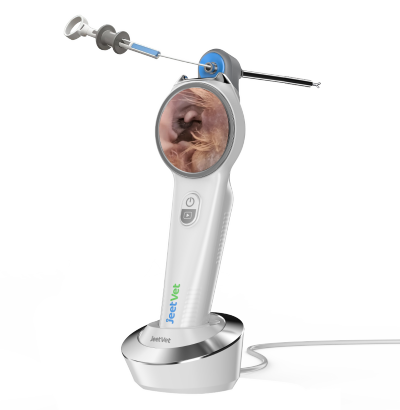
Veterinary Otoscopy: A Clearer Approach to Ear Disease Diagnosis
Ear disease is one of the most common clinical problems encountered in small animal practice. Chronic otitis, recurrent infections, and ear canal inflammation can significantly impact an animal’s comfort and quality of life. To improve diagnostic accuracy, veterinarians increasingly rely on Veterinary Otoscopy performed with a Veterinary Endoscope.
Compared with traditional handheld otoscopes, endoscopic otoscopy offers deeper access, clearer visualization, and more reliable assessment of the ear canal and tympanic membrane.
What Is Veterinary Otoscopy?
Veterinary otoscopy is an endoscopic examination of the external ear canal. By using a slim and flexible Veterinary Endoscope, clinicians can visualize anatomical structures that are often hidden or difficult to access with standard tools.
This technique is widely applied in Small Animal Endoscopy, particularly for patients with narrow, painful, or inflamed ear canals.
When Is Endoscopic Otoscopy Recommended?
Endoscopic ear examination is especially valuable in cases involving:
- ▪️Chronic or recurrent otitis externa
- ▪️Suspected ear canal foreign bodies
- ▪️Excessive cerumen accumulation
- ▪️Ear canal polyps or masses
- ▪️Evaluation of tympanic membrane integrity
- ▪️Persistent ear infections with poor treatment response
Clinical Advantages of Otoscopy with a Veterinary Endoscope
Using a Veterinary Endoscope for otoscopy provides several important advantages:
- ▪️High-definition visualization of the entire ear canal
- ▪️Improved diagnostic accuracy and confidence
- ▪️Minimally invasive examination with reduced patient discomfort
- ▪️Better clinical documentation and client communication
- ▪️Guided procedures such as ear flushing and sampling
The Role of Portable Endoscopes in Ear Examinations
Portable endoscopic systems have made otoscopy more accessible in daily veterinary practice. Their lightweight design and ease of handling allow clinicians to perform detailed ear examinations without the need for large endoscopy towers.
Modern Veterinary Endoscope systems designed for otoscopy combine portability, durability, and image clarity, making them suitable for general practices, referral hospitals, and mobile clinics.
Otoscopy in Long-Term Ear Disease Management
Ear diseases often require ongoing monitoring and follow-up. Endoscopic otoscopy enables veterinarians to assess treatment response, track disease progression, and adjust therapy based on direct visualization.
Integrating Veterinary Otoscopy into routine ear examinations supports earlier diagnosis and more targeted, effective treatment strategies.
Conclusion
Otoscopy is one of the most practical and widely used applications of veterinary endoscopy. By adopting endoscopic ear examination with a Veterinary Endoscope, veterinarians can enhance diagnostic precision, improve clinical decision-making, and deliver better outcomes for small animal patients.