What Is a Veterinary Endoscope and Why Is Every Modern Veterinary Clinic Using One?
As veterinary medicine continues to evolve, advanced diagnostic technologies are becoming essential for improving patient care. Among these innovations, the veterinary endoscope has become one of the most valuable tools for veterinarians treating companion animals.
Whether used for foreign body removal, gastrointestinal examination, respiratory diagnostics, or biopsy procedures, a veterinary endoscope allows veterinarians to see inside an animal's body without invasive exploratory surgery.
But how does a veterinary endoscope actually work? In this guide, we'll explain the basic principles, components, and applications of veterinary endoscopy and why it is becoming a standard tool in modern veterinary practice.
What Is a Veterinary Endoscope?
A veterinary endoscope is a flexible medical imaging device used to examine internal organs and body cavities in animals. It consists of a slim insertion tube equipped with a camera, light source, and often a working channel for specialized instruments.
The endoscope transmits live images to a monitor, allowing veterinarians to directly inspect tissues, identify abnormalities, and perform minimally invasive procedures.
Veterinary endoscopes are commonly used in:
- Dogs
- Cats
- Exotic animals
- Small mammals
- Birds
Main Components of a Veterinary Endoscope
1. Imaging Sensor
The imaging sensor captures high-resolution images from inside the animal's body. Modern veterinary endoscopes use advanced CMOS technology to provide clear and detailed visualization.
2. LED Illumination System
Because internal body cavities are naturally dark, a veterinary endoscope uses integrated LED illumination to provide sufficient light for examination.
3. Flexible Insertion Tube
The insertion tube allows the veterinary endoscope to navigate complex anatomical pathways such as the gastrointestinal tract, respiratory tract, and urinary system.
4. Working Channel
Many veterinary endoscopes include a working channel that allows instruments such as biopsy forceps, graspers, and retrieval tools to be introduced during the procedure.
5. Display System
Images captured by the endoscope are displayed in real time on a monitor, smartphone, tablet, or computer, allowing veterinarians to perform accurate examinations and procedures.
How Does a Veterinary Endoscope Work During a Procedure?
The process is straightforward but highly effective:
- The animal is prepared and, if necessary, placed under sedation or anesthesia.
- The veterinary endoscope is inserted through a natural body opening.
- Real-time images are transmitted to the display.
- The veterinarian examines internal tissues and structures.
- If necessary, instruments are introduced through the working channel.
- Diagnostic or therapeutic procedures are completed.
Because the procedure uses natural body openings, surgical incisions can often be avoided.
Common Applications of Veterinary Endoscopes
Foreign Body Removal
- Fishhooks
- Bones
- Toys
- Sewing needles
- Fabric and string
Gastrointestinal Examination
- Chronic vomiting
- Weight loss
- Gastric ulcers
- Digestive tract inflammation
Respiratory Examination
- Chronic coughing
- Sneezing
- Nasal discharge
- Airway abnormalities
Biopsy Procedures
- Tumor diagnosis
- Inflammatory disease investigation
- Tissue sampling
Benefits of Veterinary Endoscopy
- Minimally invasive procedures
- Reduced patient trauma
- Faster recovery times
- Improved diagnostic accuracy
- Real-time visualization
- Biopsy and treatment capabilities
- Reduced need for exploratory surgery
These advantages have made the veterinary endoscope an essential tool in modern companion animal medicine.
Why Portable Veterinary Endoscopes Are Becoming More Popular
Portable veterinary endoscope systems offer significant advantages compared with traditional endoscopy platforms.
- Lightweight design
- Lower acquisition costs
- Easy transportation
- Quick setup
- Flexible clinical applications
These benefits make portable systems particularly attractive for small and medium-sized veterinary clinics.
How JeetVet Veterinary Endoscopes Support Clinical Practice
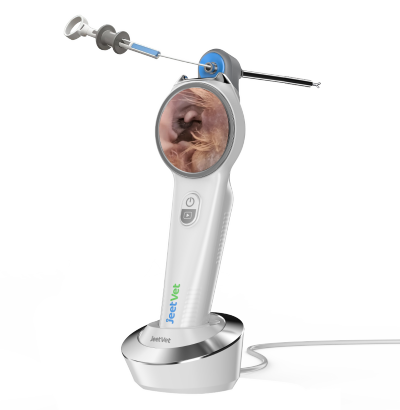
JeetVet develops portable veterinary endoscope solutions designed to support a wide range of diagnostic and therapeutic procedures.
Key features include:
- High-definition imaging
- 360° rotation control
- Water and air supply systems
- Working channel compatibility
- Portable operation
- Phone, tablet, and computer connectivity
These features help veterinary professionals improve diagnostic confidence while delivering safer and more efficient patient care.
Conclusion
Understanding how a veterinary endoscope works helps veterinarians appreciate the value of minimally invasive diagnostics and treatment.
From foreign body removal to respiratory and gastrointestinal examinations, veterinary endoscopy continues to transform modern veterinary medicine.
As technology advances, portable veterinary endoscope systems are making advanced endoscopic procedures more accessible than ever before, helping clinics improve efficiency, diagnostic accuracy, and patient outcomes.